
Who This Blog Is For: Anyone across San Antonio — from the offices off NW Military Highway to the commuters crawling up 281, out to the families in Stone Oak, Alamo Heights, and Castle Hills — who ends the day with a jaw that aches, clicks, or simply will not unclench. If you have started to wonder whether the jaw clenching from stress you feel every afternoon is tied to something deeper than a hard week, you are exactly who we had in mind.
Have you caught yourself mid-afternoon with your teeth pressed together, jaw tight and shoulders riding up near your ears, with no memory of when it started? Do you wake up with a sore, tired jaw even after a full night’s sleep? Have the dull headaches behind your temples become so routine that you have stopped mentioning them to anyone?
If any of that sounds familiar, we want you to know we hear it often. We hear it from desk workers, from teachers and nurses near the Medical Center, and from spouses holding the home together while a partner serves at JBSA. San Antonio asks a lot of people, and the body keeps a record of that effort somewhere. For a great many people, the first place it shows up is the jaw. The good news we want to share is that a clenched jaw is rarely the whole story — and understanding the rest of it can change how you feel.
Key Insights
- A jaw that clenches all day is usually following an old protective reflex, not a bad habit you should be able to simply decide to stop.
- Daytime clenching and nighttime grinding are often two versions of the same braced jaw, which is why focusing on only one of them rarely settles both.
- When the top of the neck shifts, the spine compensates in ways that can leave the jaw guarded and ready to clench — even when your neck itself feels perfectly fine.
- If relaxation, stretching, or a busy person’s willpower have never quieted your jaw for long, it may be because the structural foundation underneath the tension was never part of the conversation.
Why Does Jaw Clenching From Stress Happen in the First Place?
Jaw clenching from stress happens because the body braces under pressure, and the jaw is one of the first muscle groups to tighten. When stress stays elevated for weeks or months, that bracing quietly becomes a habit the jaw holds onto, even during sleep, leaving the muscles sore, fatigued, and slow to let go.
We hear this question often, and usually with a little frustration behind it, because clenching feels like something you should be able to simply stop doing. Here is the gentlest way we know to put it: your jaw is one of the first places your body stashes stress. When the pressure piles up — the inbox that never empties, the deadline that keeps sliding, the long crawl home where you reach the driveway with your teeth already set — your jaw tightens right along with your shoulders and your breath, trying its best to brace you for all of it.
The hard part is that your jaw was made for a quick threat, not for a Tuesday that simply never lets up. So it holds on. It keeps bracing through meetings, through dinner, often straight through the night, and almost always without asking your permission. That is why “just relax” has probably never worked for you — not because you are not trying hard enough, but because the part of you doing the clenching never got the message that it is finally safe to let go.
If you have been quietly carrying this for a while, we want you to know it makes complete sense, and you are not doing anything wrong. And as it turns out, your jaw has not been carrying it alone.

What Does Teeth Grinding and Jaw Clenching Feel Like Day to Day?
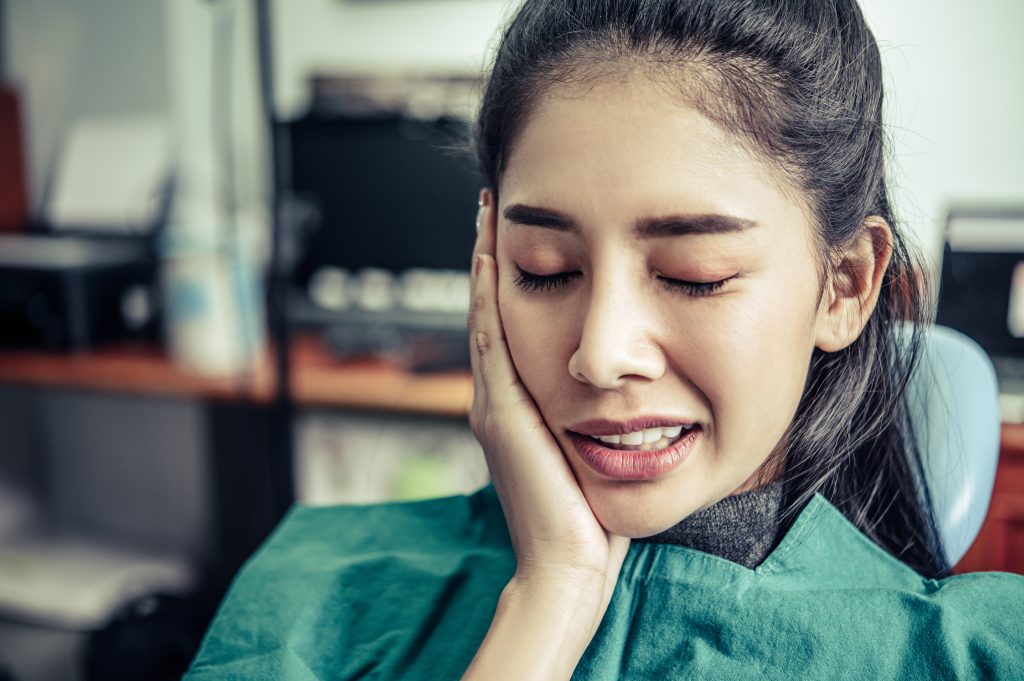
For most people, teeth grinding and jaw clenching does not announce itself with one dramatic moment. It arrives as a collection of small, easy-to-dismiss things. There is the tightness below the ear by mid-morning. There is the click when you yawn over breakfast tacos. There is the jaw pain and tension headaches that build through a long afternoon and follow you home.
We want to be honest about something we hear constantly: people often feel a little silly bringing this up, as though a tired jaw is not a “real” problem. It is real, and it is wearing. When your jaw never fully rests, neither does the rest of you.
How Could Your Upper Neck Be Keeping Your Jaw on Edge?
This is the connection Dr. Greg Dutson, an upper cervical chiropractor in San Antonio TX, looks at closely. When the topmost bone in the neck shifts out of its ideal position, the spine compensates to keep your head level and your eyes on the horizon. That compensation creates uneven mechanical stress and can alter the nerve pathways running through this crowded, sensitive region.
Because the upper neck and the jaw share so much of this real estate, that ongoing compensation can leave the jaw guarded and primed to clench. It is why stress and TMJ pain so often travel together, and why simply trying to “relax more” rarely resolves it on its own.
Can Anything Actually Relieve Jaw Clenching From Stress?
For many people, yes — and the path often starts by addressing the structural foundation rather than the jaw alone. Upper cervical care in San Antonio at Thrive is gentle and measurement-guided, with no twisting, popping, or cracking of the neck. Dr. Dutson uses precise imaging to understand exactly how your upper neck is positioned before anything else happens.
Dr. Dutson knows this experience personally. After being told for years to simply live with his own headaches and neck pain, he found a different answer — and it is the reason he does this work. When the upper neck holds its corrected position, the body often has a far easier time letting the jaw finally rest.
You’re Losing Quiet Evenings to a Jaw That Won’t Let Go — Schedule a Consultation With Dr. Dutson
Think about what a clenched jaw quietly takes from you. The dinner you cannot fully enjoy because your face aches. The evening on the patio that the headache cuts short. The mornings you wake up already tired of the soreness. Those small, ordinary good moments add up to a lot of life, and you have been handing them over to stress one tightened jaw at a time.
You do not have to keep doing that. If jaw clenching from stress has been part of your days for too long, the most caring next step is simply to ask whether your upper neck is part of the picture. As an upper cervical chiropractor in San Antonio TX, Dr. Dutson would welcome the chance to look closely and answer your questions honestly. One conversation can begin to change how every afternoon feels.
When you are ready, click here to fill out the form to schedule your consultation with Dr. Dutson.
Frequently Asked Questions
Why does stress seem to settle in my jaw and not somewhere else?
The jaw is one of the body’s most reactive muscle groups, so it often tightens first when you are under pressure. When the upper neck is also strained, the jaw gets even fewer chances to release, which is why it can feel like the chosen home for your stress.
I clench during the day, but my partner says I grind at night — is that the same problem?
They are two faces of the same pattern. Teeth grinding and jaw clenching both come from a jaw that stays braced, whether you are awake and aware of it or asleep and not. Addressing the underlying tension often helps with both.
Is upper cervical care gentle, or does it involve the cracking I’m nervous about?
It is gentle. Dr. Dutson’s approach uses precise, low-force corrections with no twisting, popping, or forceful cracking of the neck, which is part of why so many people who were anxious about chiropractic feel comfortable here.
Could my jaw really be connected to my afternoon headaches?
Quite possibly. Jaw pain and tension headaches frequently share the same overworked muscles and nerves in the head and upper neck, so people often find that as the jaw settles, those familiar headaches may ease as well.
How can you tell whether my jaw tension is structural or just stress?
Our chiropractor in San Antonio uses specific imaging and measurements to assess how your upper neck is positioned. That is how we can see whether stress and TMJ pain in your case have a structural component worth addressing, rather than guessing.
How long before I might notice my jaw starting to relax?
Everyone is different, and we never promise a timeline. That said, many people begin to notice subtle changes within the first several weeks as the body adapts to holding a more balanced position.
What actually happens at a first visit?
Your first visit is mostly listening and looking. Dr. Dutson takes time to understand your history, examines the upper neck, and explains what he finds in plain language before anything else. You will leave understanding your own situation more clearly.
I’ve had this for years — is it too late to do anything about it?
It is rarely too late to ask the question. Many people who assumed their jaw tension was permanent are surprised by what becomes possible once the structural foundation is part of the conversation.
To schedule a consultation with Dr. Dutson, call our San Antonio office at 210-939-6203. You can also click the button below.
 If you are outside of the local area, you can find an Upper Cervical Doctor near you at www.uppercervicalawareness.com.
About the Author


